
 *Post Dr. Georgios Anthrakefs
2nd sequel
This framework is aimed primarily at the development and operation of hydrogen networks, on both existing natural gas networks (200,000 km of transmission and over 2,000,000 km of distribution pipelines) and emerging hydrogen networks (at present, the total length of hydrogen pipelines is only 2,000 km – mostly privately owned, unregulated, small-capacity lines).
The Hydrogen Strategy is coupled with an EU strategy on systems integration, which means linking the various energy carriers – electricity, heat, gas, and solid and liquid fuels – with each other and with the end-use sectors, such as industry, transport and energy infrastructure, as well as buildings. Apart from the hydrogen supply to industrial parties situated close to electrolysers, the idea is to supply hydrogen to a multitude of final customers.
The EU Hydrogen Strategy focuses mainly on larger pipeline networks at the transmission level. The idea of the EU Hydrogen Strategy is that existing gas pipelines can be used to either create a mingled stream via the admixing of hydrogen into the natural gas grid or repurpose these existing natural gas pipelines for dedicated hydrogen usage. The EU views its future gas system as consisting of two separate systems: one for (progressively decarbonised) methane and another for hydrogen, both developing in parallel and co-existing, as part of ongoing European energy system decarbonisation. By 2030, at least 40 GW of renewable hydrogen electrolysers will be installed and up to 10 million tons of renewable hydrogen will be produced in the EU. By 2050, the hydrogen market will reach maturity, but no clear aims in terms of installed capacity are provided. On the one hand, huge investments are required; on the other hand, “green” hydrogen is currently not price-competitive.
The European natural gas networks are also facing an existential challenge from the ongoing process of decarbonisation of the European energy system. Given the EU Climate Law legally binding GHG emissions reduction targets (55% by 2030 and net-zero by 2050), there will be less and less natural gas for these networks to transport as time goes by, particularly post-2030. The EU’s hydrogen ambition is manifested in various policy and legislative initiatives, such as the EU Hydrogen Strategy, the Fit for 55 package12 and the RePowerEU plan. The EU Hydrogen Strategy stipulates a target of 10 mn tons of renewable hydrogen by
2030.
To ensure the realization of this ambitious agenda, the EU wants to involve a new privatepublic partnership called the European Clean Hydrogen Alliance13, involving collaboration between public authorities, industry and civil society. Following the invasion of Ukraine by Russia and the consequent disturbances on the European energy markets, the EU increased its targets for hydrogen and renewable gases as part of the REPowerEU Plan.14
III. Evolution of EU Hydrogen Regulation
The EU hydrogen legal framework, primarily solidified by the 2024 Hydrogen and Decarbonised Gas Market Package (Directive (EU) 2024/1788 and Regulation (EU) 2024/1789), focuses on integrating renewable/low-carbon hydrogen, setting up infrastructure, and defining market rules. Key 2025/2026 developments include implementing delegated acts for low-carbon hydrogen definitions, Infrastructure and Governance15: The European Network of Network Operators for Hydrogen (ENNOH) is being established in 2025 to manage the development of a dedicated pan-European hydrogen network and transposing rules into national law.16
The EU Commission’s hydrogen ambition and its vision of the future European gas system are a “tale of two systems” – one for (progressively decarbonised) methane and another for hydrogen, both developing in parallel and co-existing.17 This is also reflected in its legislative initiatives, which provide a legal/regulatory framework for the development of a hydrogen market. These include the TEN-E-Regulation on guidelines for trans-European energy infrastructure (revised and adopted on 30 May 2022), the Renewable and Natural Gases and Hydrogen (RNGH) Directive, and the Renewable and Natural Gases and Hydrogen (RNGH) Regulation (advanced as part of the “Fit for 55” Package in 2021 and adopted on 13 June 2024).
In addition to providing the rules for developing and operating the hydrogen market, the RNGH Directive and the RNGH Regulation establish and update the network planning provisions concerning natural gas and hydrogen networks, respectively, aiming at the coordinated development of gas infrastructure. It is important to acknowledge that, at present, the European hydrogen market does not exist. The total length of hydrogen pipelines in Europe is less than 2,000 km, compared to the total length of natural gas transmission pipelines of over 200,000 km.
As the role of hydrogen will be quite different from that of natural gas, the role of the hydrogen pipeline system will also be different from that of the natural gas pipeline system. Specifically, it will play more of a balancing role rather than facilitating large-scale transmission over long distances. Natural gas has historically been transported over very long distances from centralized production sites (i.e., Russia) to consumption centers across Europe. The natural gas pipeline system was therefore designed primarily for bulk transmission over long distances, ensuring security of supply and cross-border trade.
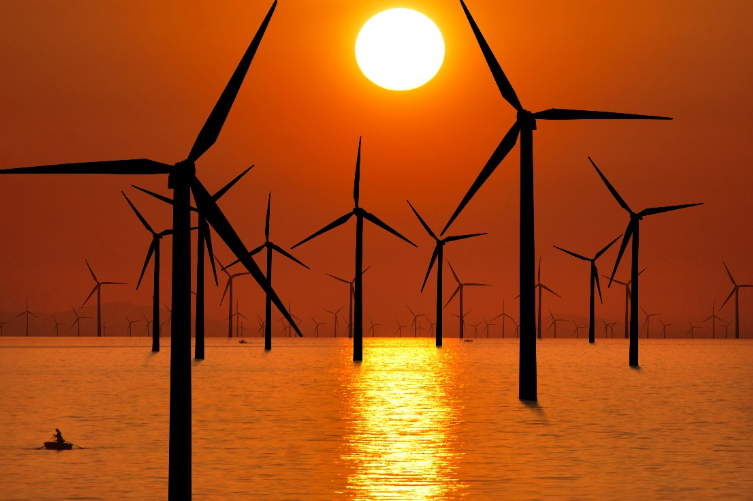
Hydrogen, by contrast, is expected to be produced closer to demand centers – particularly where renewable electricity is abundant (offshore wind hubs, solar regions, industrial clusters). Because renewable hydrogen production via electrolysis is closely linked to electricity availability, it will be more geographically distributed and variable. As aresult, hydrogen flows are likely to be more regional rather than continental in the early
stages and infrastructure will need to manage variability in production rather than simply move large volumes continuously from point A to point B. The system must respond flexibly to fluctuations in renewable electricity generation, which makes hydrogen networks functionally closer to an energy storage and balancing mechanism than a purely transmissionoriented system.
Furthermore, hydrogen differs significantly from natural gas in physical and chemical properties, as it has lower volumetric energy density, greater diffusivity and smaller molecular size, as well as, potential for material embrittlement in pipelines. These characteristics affect pipeline design, compression needs, and system operation. Large-scale, high-pressure, long-distance hydrogen transmission is technically feasible but more complex and costly than natural gas transmission. Consequently, hydrogen networks are likely to
develop incrementally, often repurposing existing natural gas infrastructure and focusing on industrial clusters. This reinforces the argument that hydrogen infrastructure will initially prioritize balancing, sector coupling, and local decarbonization rather than replicating the traditional natural gas long-distance transport model.
The key principles of natural gas and hydrogen system operation are provided in the RNGH Directive and the RNGH Regulation. Accordingly, the RNGH Directive re-confirmed a legal basis for the entry of renewable and low carbon gases into the natural gas system, as the rules established by the Third Gas Directive for natural gas also applied to “biogas and gas from biomass or other types of gas”, as long as they could be technically and safely injected into and transported through the natural gas system.18 Thus, the RNGH Directive builds upon the framework established by the Third Gas Directive, which already provided that rules
applicable to natural gas also applied to Biogas, Gas from biomass and other gases, provided they could be technically and safely injected into and transported through the natural gas system. This continuity is important because it avoids regulatory fragmentation. Rather than creating an entirely separate legal regime for renewable gases, the EU confirmed that existing market rules – such as third-party access, unbundling, and tariff regulation – apply equally to renewable and low-carbon gases. This reinforces legal certainty for investors and operators.
10 https://eur-lex.europa.eu/eli/reg/2024/1789/oj/eng.
11 https://eur-lex.europa.eu/eli/reg/2022/869/oj/eng.
12 Communication from the Commission to the European Parliament, the Council, the European Economic and Social Committee and the Committee of the Regions: «Fit for 55»: delivering the EU’s 2030 Climate Target on the way to climate neutrality COM/2021/550 final.
13 https://single-market-economy.ec.europa.eu/industry/industrial-alliances/european-clean-hydrogenalliance_en.
14 https://commission.europa.eu/topics/energy/repowereu_en.
15 https://www.europarl.europa.eu/RegData/etudes/BRIE/2025/777921/EPRS_BRI(2025)777921_EN.pdf. 16 https://ennoh.eu/ENNOH-Adopts-and-Publishes-its-Statutory-Documents.html.
17 Yafimava, K., From natural gas to hydrogen: what are the rules for European gas network decarbonisation and do they ensure flexibility and security of supply?, Oxford Institute for Energy Studies Paper: NG 190, April
2024. [https://www.oxfordenergy.org/wpcms/wp-content/uploads/2024/04/NG-190-From-natural-gas-tohydrogen-what-are-the-rules-for-European-gas-network-decarbonisaton.pdf] (2026).
Continued…